What is an interstitial water sample and why do we care?
Sediment deposited below the seafloor often contains a lot of water, which is called interstitial water or porewater (because it is found in the spaces between grains in the sediment). Geochemists can study the composition of the water to learn about processes happening in the sediment after deposition. For instance, changes in pH (acidity) of the water can dissolve some particles.
Microbes also interact with the sediment and water as they use different compounds energy, which can also result in changes to the sediment composition after deposition. For scientists who want to use sediment to understand past climate, it is important to be able to figure out if our sediment records represent conditions at the time of deposition, or if these processes after deposition have changed the record.
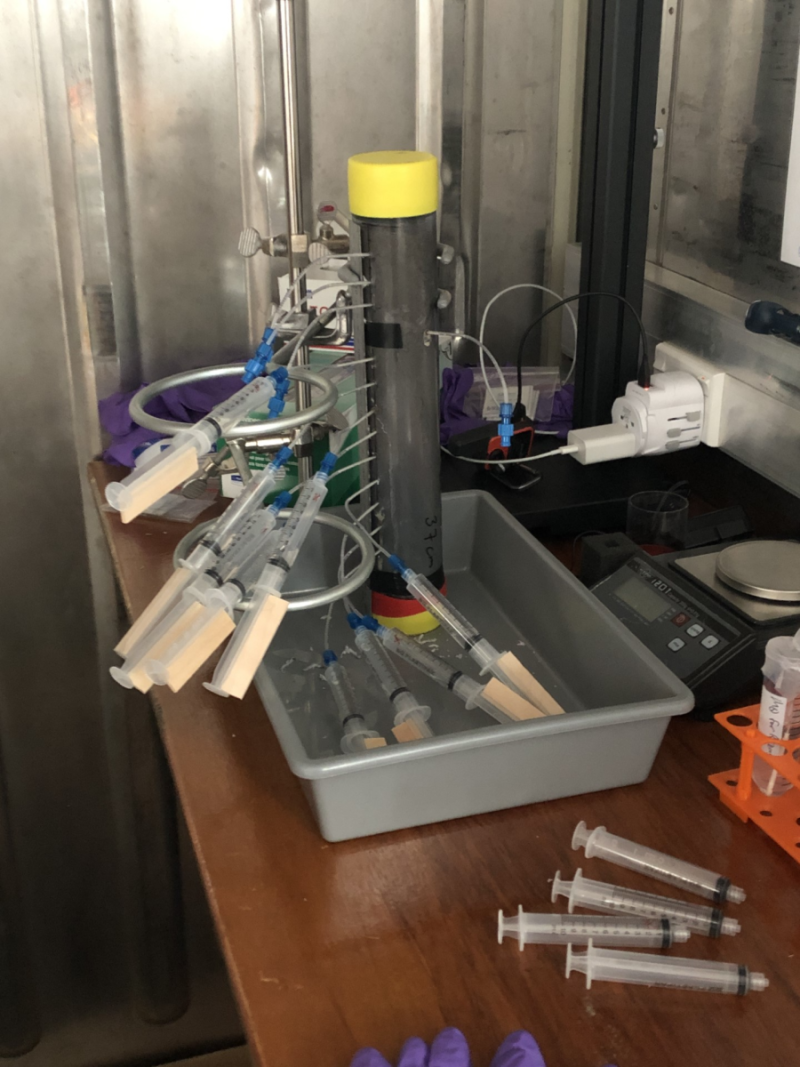
Geomicrobiologist Alex Michaud studies the interactions of microbes, porewater, and sediment. To do this with the sediment cores we’re collecting here at the KIS3 site, he has extracted porewater using a tool called a rhizon, which is similar to a small syringe that is inserted into the sediment at different places to remove the water from the sediment core.