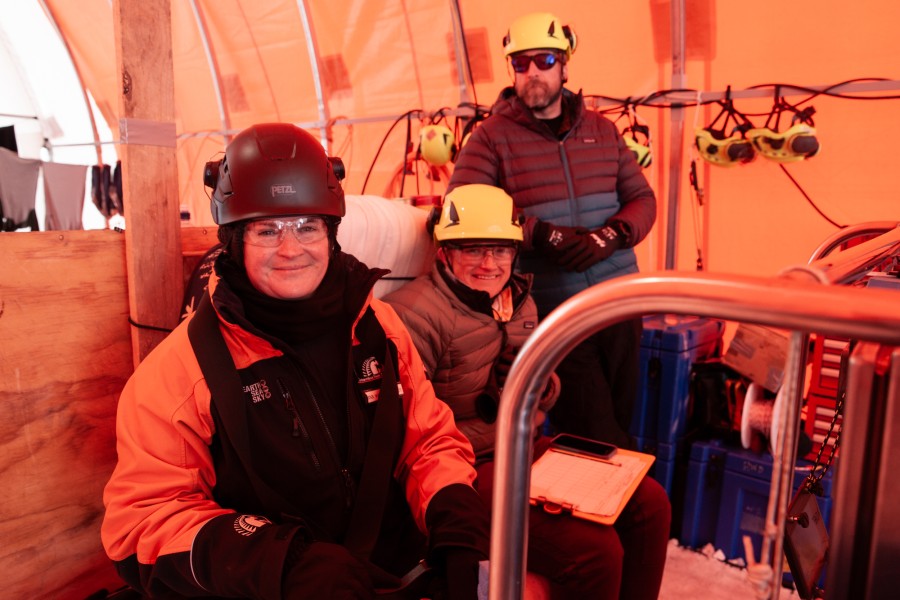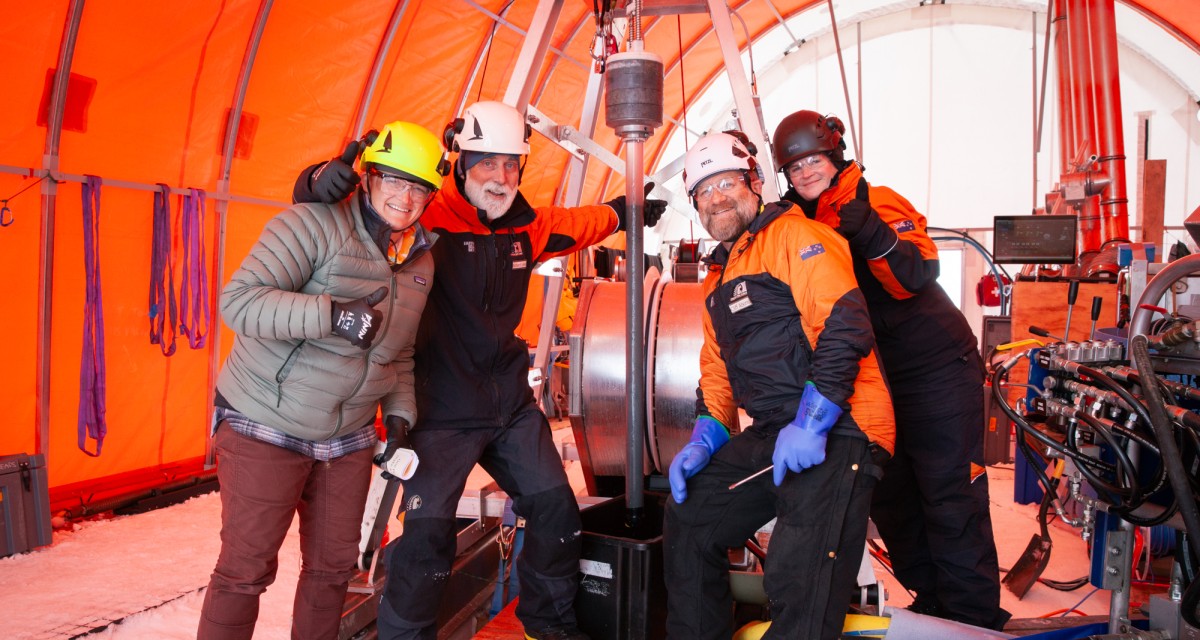
It’s ‘open hole’ science time at KIS3. With our hot water drillers having successfully melted a hole through the 588m thick ice shelf, they handed over control of the drill tent to our science team.
In the early hours of the morning the team carried out their first set of scientific measurements. They deployed a gravity corer, a relatively simple weighted coring instrument that utilises Earth’s gravitational force to ram a plastic tube into the sediment.
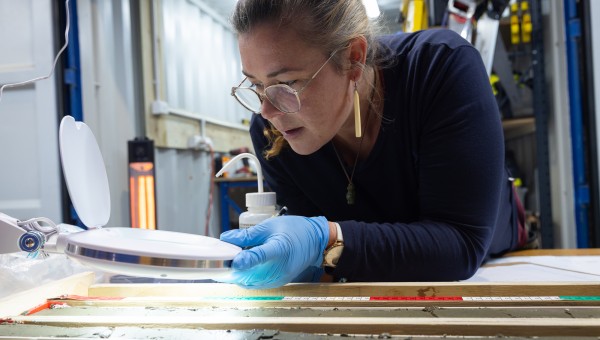
The team were delighted to obtain a whopping 1.1m core with the first deployment – a fantastic result for this coring technique. This long core was set aside for X-rays and sedimentology analysis, and a second core was sliced for microbiological and ancient DNA analyses.
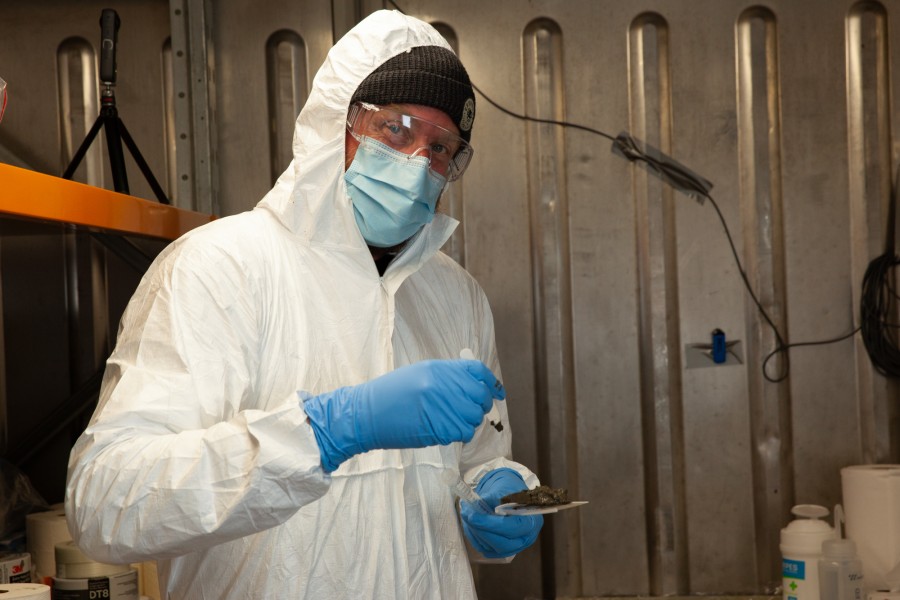
Brendan Reilly and Tina van de Flierdt carried out the microbiology sampling, working their way through 1cm slices of the core, taking multiple samples from each. This painstaking process also requires careful protocols to avoid contamination from other sources of DNA, so they were suited up in masks, googles, and protective suits.
A custom-built downhole camera was deployed to collect imagery of the ice shelf, ocean cavity and seafloor, and several CTD (Concentration, Temperature and Depth) casts were taken to collect oceanographic data.
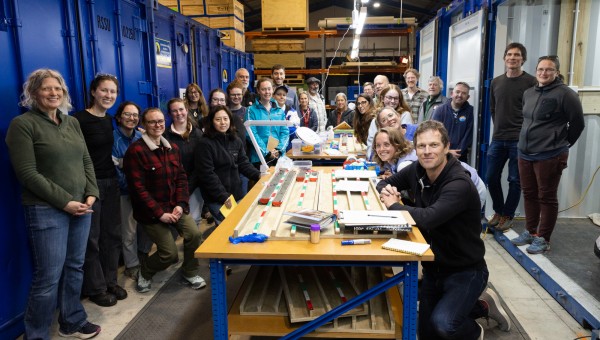
All in all a very full night’s work!